When you begin deep work with a coach, you expect the space between you and your practitioner to be private and held safely. However, some practitioners are inviting algorithms into the coaching container. For those of us committed to deep transformation, we must ask: Is this helping your coach gain better insight, or are they outsourcing their intuition?
As a coach who has spent years training and supervising other practitioners, I have become increasingly aware of a growing trend in our profession. Some coaches are turning to Artificial Intelligence (AI) to supervise their work. Note: It is essential that practitioners have supervision for their work to ensure the safety of clients by maintaining objectivity, having a resource for challenges, and managing countertransference (their own feelings).
The process is becoming standard: your coach might record the session, transcribe it, and feed the data into an AI program. The AI then analyses the dialogue, offering feedback and suggesting reflections based on psychological models.
On the surface, this might sound like efficiency and objectivity. But I find this deeply concerning. To understand why, we must look beyond just the transcript of words and examine the different levels on which your coach impacts you.
The Three Levels of Communication in Your Session
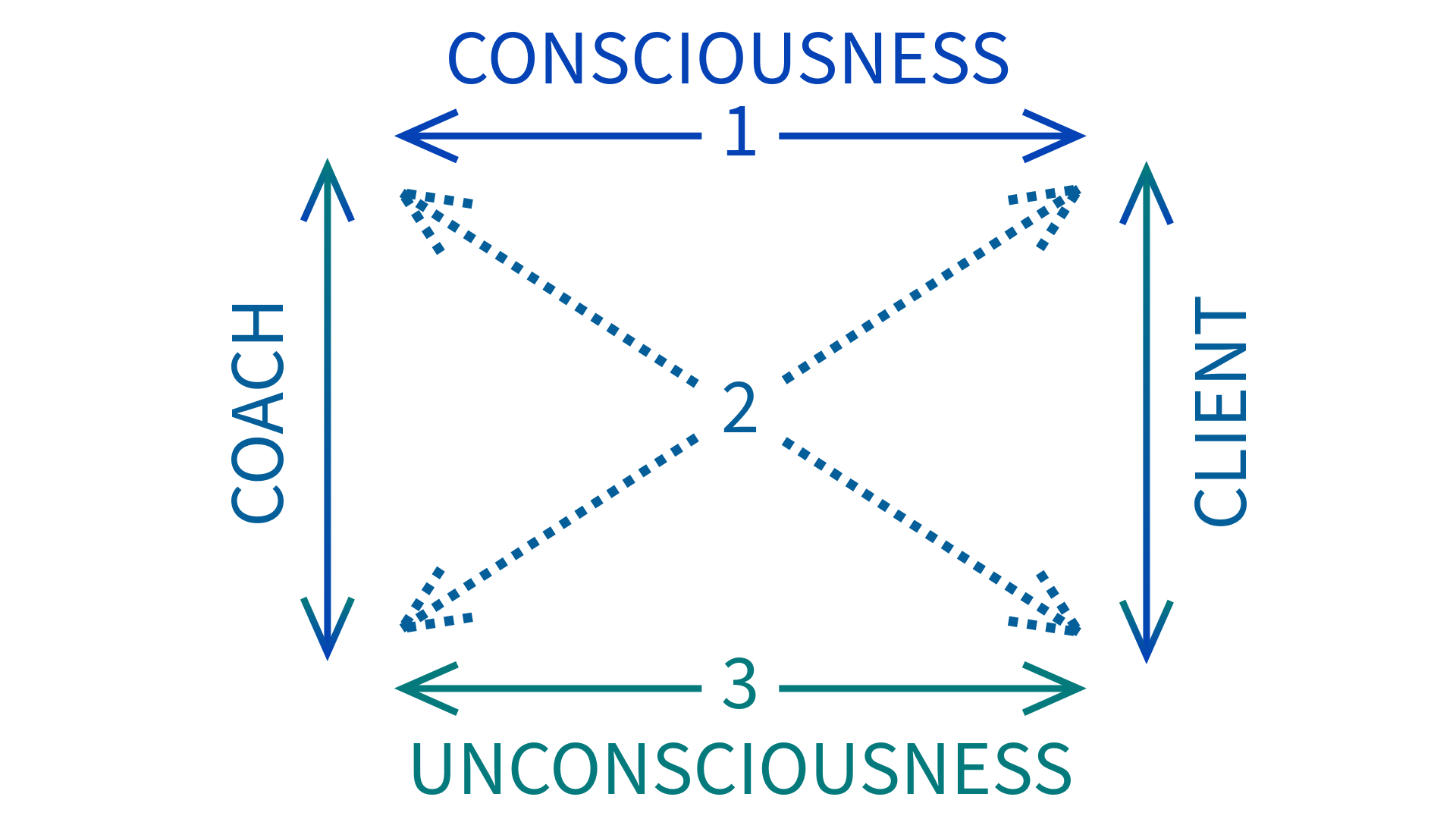
Coaching is never just about words. When two people sit together in a container for transformation, communication occurs on three distinct levels:
1. Consciousness to Consciousness:
At the simplest level, we have the explicit exchange. This is what your coach is aware of saying to you, and what you are aware of receiving. In many ways, this is the "safest" level because your conscious mind has the agency to accept or reject the message.
2. Conscious to Unconscious:
Here, the dynamic shifts. Your coach might offer a specific intervention or question that bypasses your immediate awareness. It trickles down into a deeper part of your mind. You might not fully register it in the room, but it emerges later—perhaps in a dream or a sudden realisation days after the session.
3. Unconscious to Unconscious:
This is the deepest level of the work. It occurs when your coach is not fully aware of what they are transmitting to you or why. A skilled practitioner knows this territory. It is why they hold a state of “reverie”—softening their conscious focus to allow images, feelings, and intuitions to rise. They are receiving information from the unconscious field generated between you.
The Human Relationship at the Heart of Coaching
The relationship between you and your coach involves more than the words exchanged. Tone, pace, expression and bodily responses all contribute to how you experience one another. For me, this makes the coach’s presence, self-awareness and professional judgement central to the work. My concern is that relying on AI to interpret sessions may draw attention away from this direct human encounter and give an algorithm’s interpretation more authority than it deserves.
When Algorithms Inform Intuition
When a coach asks AI to interpret a session, its suggestions may shape what they notice and how they understand you. Feedback enters their conscious mind and may influence unconscious expectations and responses. My concern is that the coach risks being, in effect, programmed by AI.
In your next session, their intuition may be coloured by algorithmic output without them recognising its influence. At the unconscious-to-unconscious level, that influence may pass between you without either person being aware enough to question it.
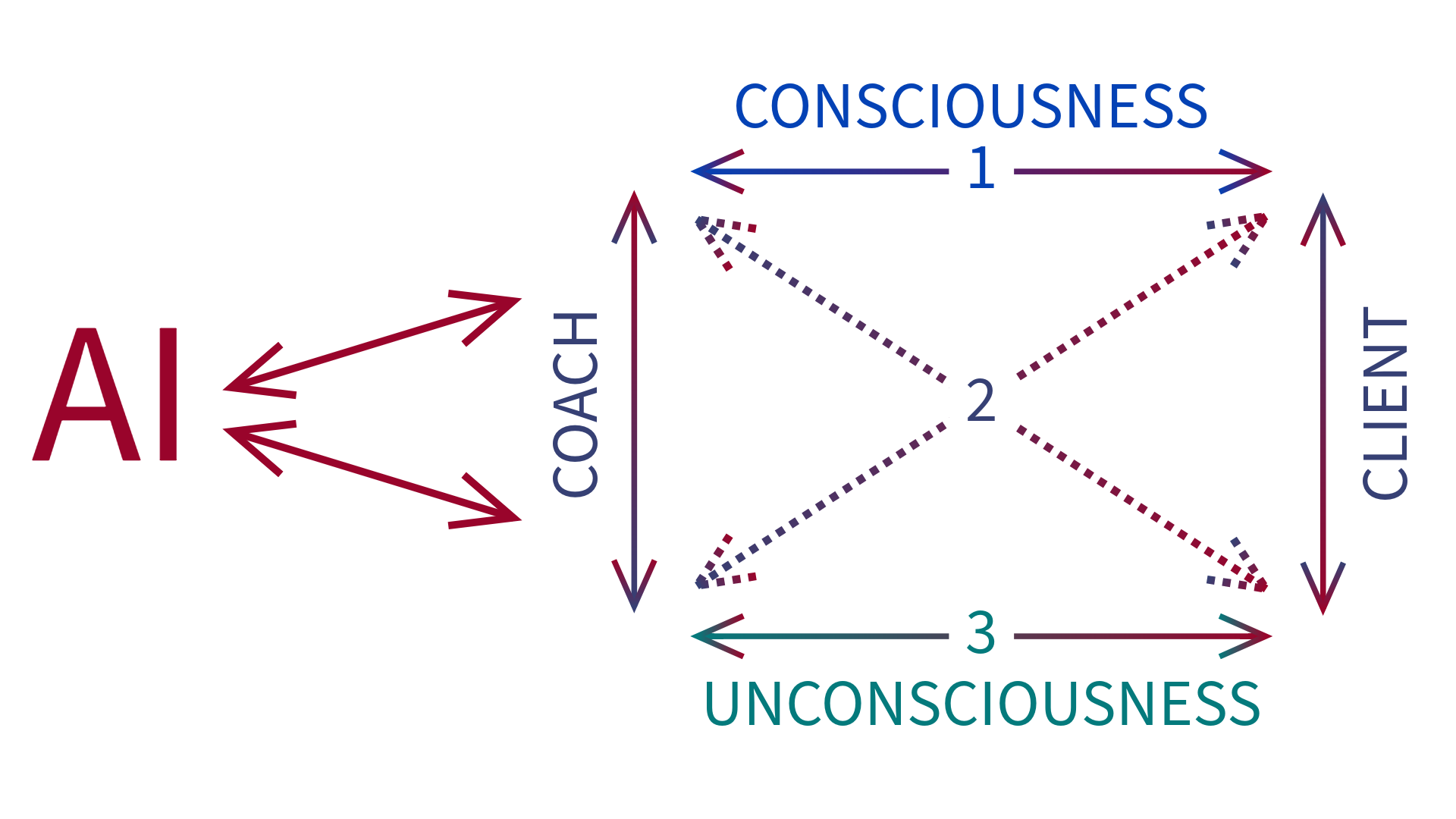
If AI becomes the authority interpreting your relationship, it may effectively begin to hold the coaching container. The “third” in the room becomes a large language model rather than an experienced human supervisor.
Human supervision also influences a coach’s understanding. What I value is a supervisor’s capacity to explore uncertainty, challenge assumptions and hold the coach accountable.
There is also a question of trust. Clients deserve to know whether their session content is being recorded, shared or processed by another service.
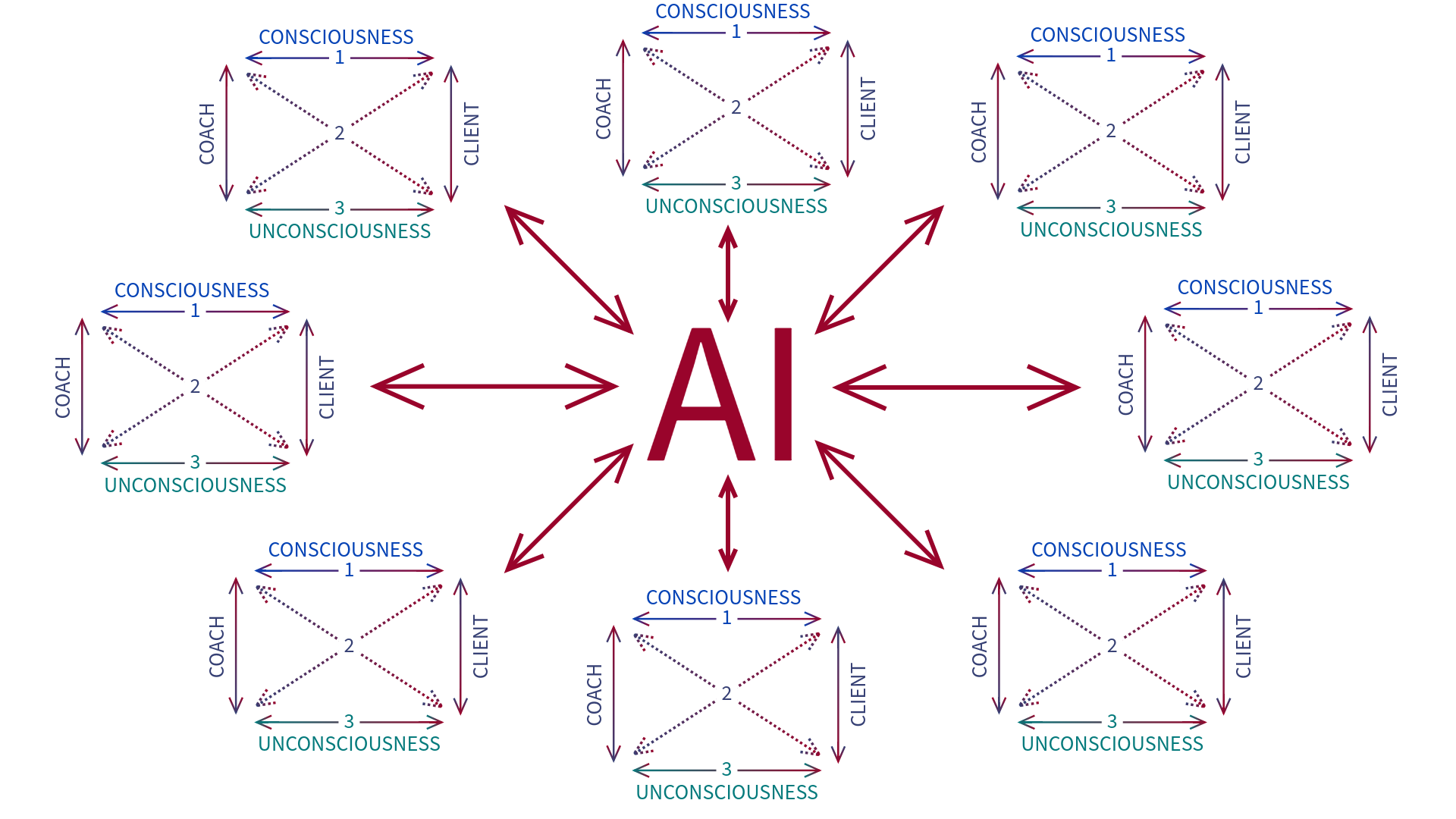
Taken to the nth degree, the risk is dystopian: AI programming human beings within one of the most intimate, sacred and safe vessels of human relationship. Do we want our deepest inner work guided by the resonance and responsibility of a human soul, or an algorithm?
In my own practice, I do not record or transcribe sessions, or put session-related information into AI. I bring my work to human supervision, with care for confidentiality, keeping our relationship grounded in human presence and professional judgement.